Crypto GuestPosts

Crypto GuestPosts

Inside the $1.3B Security Shift: Navigating Modern DeFi Vulnerabilities and Wallet Protection

Inside the $1.3B Security Shift: Navigating Modern DeFi Vulnerabilities and Wallet Protection
// News

Reading time: 3 min

Published: Jul 23, 2026 at 18:08

Security is no longer just about audited smart contracts

According to mid-year data, Web3 security losses surpassed $1.31 billion across hundreds of incidents, highlighting a shifting threat matrix where attackers increasingly bypass core protocol code to target infrastructure, bridges, and human credentials.

Infrastructure and Credential Failures

While classic smart contract hacks, such as flash loan price manipulations and logic flaws, remain numerically common, the most catastrophic losses stem from structural weaknesses outside the core code. Bridges that facilitate cryptocurrency transfers across blockchains continue to act as high-value choke points.

According to the
report wallet compromise was the most costly attack vector in H1 2026, with $444,531,691 stolen across 33 incidents.

However, phishing was the second most costly, with $366,312,027 stolen across 63 incidents. This shows that rather than breaking cryptographic algorithms, threat actors increasingly focus on human and operational elements. 

Several security breaches were reported in July 2026 only.

The AFX Trade Bridge Validator Breach

According to the reports, attackers managed to compromise the private keys belonging to five separate validators of the AFX cross-chain bridge on Arbitrum. By controlling these keys, they reached the required multi-sig quorum to authorize a fraudulent withdrawal.

Because the bridge's automated challenge period passed without intervention, the smart contract automatically processed and released the funds, which were quickly swapped for Ethereum. As a result around $24.15 million in USDC were lost.

The Ostium Oracle Manipulation Exploit

The Arbitrum-based perpetuals exchange fell victim to an
attack involving a compromised price oracle private key. 

The attacker used the key to push fake, artificially low Bitcoin price data (e.g., $5,000 instead of $60,000) into the protocol via its PriceUpKeep forwarder. They opened synthetic long positions at the fake low price and closed them at the real market price, repeating the loop to compound profits by roughly 900% per round. The attack caused around $18 million to $24 million loss.

The Balance Coin (BLC) Governance & Oracle Exploit

It this case attackers exploited the governance mechanism of the algorithmic stablecoin Balance Coin by manipulating its underlying Bitcoin price oracle.

This triggered cascading liquidations across its vaults, wiping out nearly its entire market value and draining the platform's DAO treasury (99% collapse in value; and $912,000 drained from the 42DAO treasury).

The Investor’s Security Checklist

Safeguarding cryptocurrencies against modern threats requires adopting proactive operational hygiene. CryptoGuestPosts reminds that the best practice is to store long-term holdings exclusively on a hardware wallet to keep private keys isolated from web-connected devices.

Users should also remember — never save seed phrases digitally in cloud storage, photos, or password managers, inscribe them on a durable physical medium. And regularly use reputable allowance-checking tools (such as Revoke.cash) to disconnect your wallet from smart contracts and dApps you no longer actively use.

Disclaimer. This analysis and forecast are the personal opinions of the author. The data provided is collected by the author and is not sponsored by any company or token developer. This is not a recommendation to buy or sell cryptocurrency and should not be viewed as an endorsement by CryptoGuestPosts. Readers should do their research before investing in funds.

Writer with over a decade of experience covering the cryptocurrency and blockchain industry. She began her career in the Blockchain and Crypto space in 2013 working with Cointelegraph.

Navigating the Volatility: Don’t Get Trapped by Short-Term Noise

Navigating the Volatility: Don't Get Trapped by Short-Term Noise
// News

Reading time: 4 min

Published: Jul 13, 2026 at 15:26
Updated: Jul 13, 2026 at 15:54

The crypto market is currently moving in lockstep with the broader global economy

The recent price action is not merely a product of sentiment but a direct reflection of shifting global macroeconomic currents and evolving on-chain utility.

To understand where the market is headed, we must look beyond the tickers and analyze the fundamental forces dictating capital flow. CryptoGuestPosts looks into the cryptocurrency market landscape as we navigate the second half of 2026.

Legacy Markets Shock: Macroindicators and the Fed

The crypto market is currently moving in lockstep with the broader global economy, a trend solidified since the mass adoption of institutional spot ETFs. The primary driver for recent price action has been the Federal Reserve’s hawkish stance. Minutes from the June FOMC meeting revealed that 9 of 18 officials project at least one more rate hike before the end of 2026, driven by persistent inflation concerns linked to energy costs and AI-driven demand.

This has created a "macro shock" for bitcoin price analysis. Because higher interest rates increase the opportunity cost of holding non-yielding assets, institutional capital has frequently rotated out of crypto and into Treasuries when hawkish sentiment peaks. Traders are now bracing for the U.S. CPI data release on July 14, which stands as the most critical near-term catalyst for determining whether we see a sustained recovery or further downside pressure.

Industry Overhaul: Regulatory Clarity vs. Complexity

The regulatory environment has seen significant movement, acting as a double-edged sword for the ecosystem. July 2026 marks a pivotal transition period for the European Union as the Markets in Crypto-Assets (MiCA) regulation enforces strict compliance for crypto-asset service providers.

Simultaneously, the UK's Financial Conduct Authority (FCA) has finalized its framework, which includes a more favorable 1% capital requirement for stablecoin issuers. In the United States, the SEC’s new draft strategic plan elevates digital assets to a top agency priority, signaling a move toward a more "principled" approach to registration. These crypto regulation shifts suggest that while the "Wild West" era is ending, the resulting compliance framework is setting the stage for more mature institutional participation.

On-Chain Undercurrents: The RWA Revolution

While prices grapple with macro news, on-chain data reveals a deeper story of utility expansion. Ethereum remains the undisputed leader in Real-World Asset (RWA) tokenization, commanding a 47% market share.

Ethereum's Total Value Locked (TVL) has hit $260 billion, notably surpassing the market cap of Ether itself ($210 billion), indicating high capital efficiency and adoption.

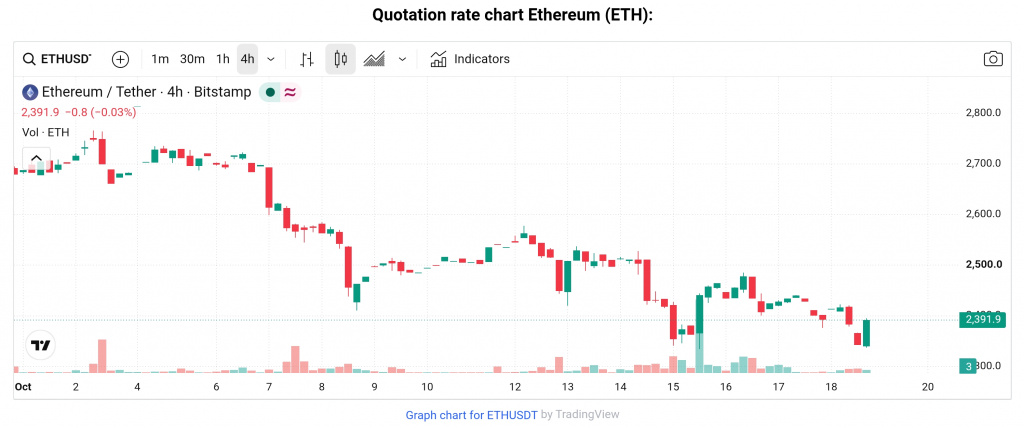
ETH price chart July 2026

Despite significant ETF outflows in June, early July data shows a reversal, with fresh capital returning to instruments like IBIT.

USDT and USDC continue to serve as the primary settlement layers for the industry, underscoring their role as the "bridge" between traditional finance and blockchain protocols.

Forward Look: What to Expect Next Week

For the coming week, market participants should remain hyper-focused on the intersection of technical thresholds and economic data.

Bitcoin price analysis suggests that a daily close above $64,000 is required to challenge higher resistance, while a failure to hold $61,190 could trigger a deeper correction.

Expect heightened volatility around the July 14 CPI release. If inflation prints softer than expected, we may see a rally fueled by renewed rate-cut optimism. Conversely, a hot print will likely force a retest of the $60,000 support level as the market prices in a more hawkish Fed for the remainder of the year.

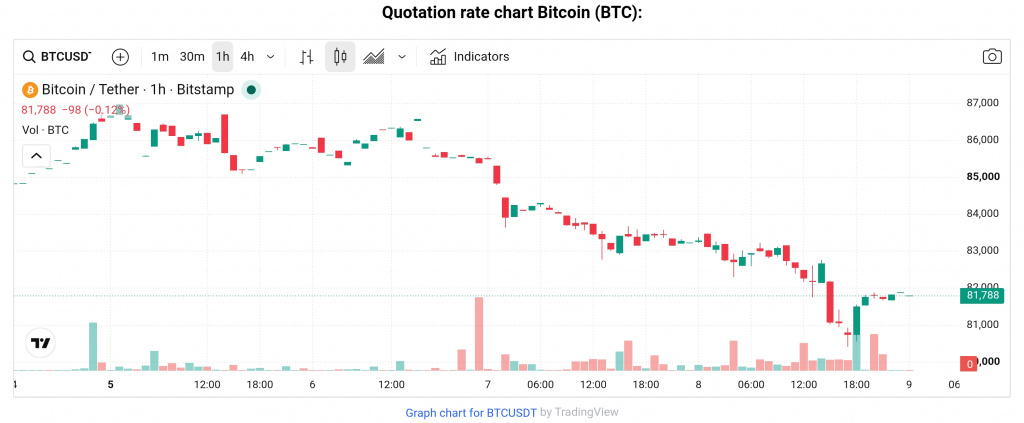
BTC price chart July 2026, 1 part

Disclaimer. This analysis and forecast are the personal opinions of the author. The data provided is collected by the author and is not sponsored by any company or token developer. This is not a recommendation to buy or sell cryptocurrency and should not be viewed as an endorsement by CryptoGuestPosts. Readers should do their research before investing in funds.

Writer with over a decade of experience covering the cryptocurrency and blockchain industry. She began her career in the Blockchain and Crypto space in 2013 working with Cointelegraph.

Wall Street Defies Retail Panic: Analyzing the Institutional Crypto Landscape

Wall Street Defies Retail Panic: Analyzing the Institutional Crypto Landscape
// News

Reading time: 5 min

Published: Jul 03, 2026 at 16:32
Updated: Jul 03, 2026 at 17:00

The flow of "big money" reveals a complex strategy

As we enter the second half of 2026, the cryptocurrency market landscape is witnessing a stark divergence between long-term institutional positioning and short-term market volatility.

While retail sentiment, reflected in the "Extreme Fear" readings of the Crypto Fear & Greed Index, remains fragile, the flow of "big money" reveals a complex strategy of repositioning rather than a wholesale exit from the asset class. Coinidol makes the analysis of the institutional fund movements and ETH flows in July 2026.

The ETF Ledger: Numbers Don't Lie

The US-listed spot Bitcoin ETFs have faced significant headwinds, recording over $520 million in
net outflows through the first week of July 2026. This trend marks the eighth consecutive week of withdrawals, underscoring a period of sustained selling pressure.

IBIT (BlackRock): Despite maintaining its status as a primary institutional vehicle, BlackRock’s iShares Bitcoin Trust has faced pressure alongside the broader market, contributing to a difficult first half of the year for Bitcoin holdings.

FBTC (Fidelity): Like its peers, Fidelity’s Wise Origin Bitcoin Fund has seen investors navigate a challenging macroeconomic environment, with net flows mirroring the wider ETF trend of cooling institutional demand.

GBTC (Grayscale): Continues to see shifts as institutional investors rebalance portfolios amid the worst H1 performance for Bitcoin since 2022.

Corporate Balance Sheets: A Pivot in Strategy

Public companies are shifting from pure-play accumulation to active capital management. MicroStrategy, a bellwether for corporate crypto holdings,
announced a new Digital Credit Capital Framework effective July 1, 2026.

This policy pivot allows for the potential monetization of up to $1.25 billion of its Bitcoin holdings. By establishing a large U.S. dollar reserve and authorizing significant repurchase programs for its securities, the company is signaling a transition toward a more nuanced, diversified treasury strategy rather than a simple "buy and hold" approach. This suggests that even the most prominent institutional proponents are refining their exposure to better weather crypto’s inherent volatility.

Expert Insight

Reflecting on the current state of institutional adoption, market analysts note that the narrative of ETFs providing a "cushion" against volatility has been tested. 

Can-Luca Köymen, Investment Strategist at
Sygnum Bank:

"With Bitcoin trading well below its 200-day average and beneath the previous cycle's high, the entry point looks relatively attractive. We therefore see a lower probability of continued net ETF outflows in July and a better chance of flows turning positive, though summer liquidity means any volume is likely modest in magnitude but positive in direction. A 17 July hearing on the CLARITY Act is a further watch item: a surprise push toward passage could act as a catalyst.”

The Arbitrage & Premium Mechanism

Institutional participation often involves "basis trade" strategies, a cornerstone of hedge fund activity in crypto. By capturing the spread between the spot price of Bitcoin and the price of futures contracts, these funds can generate yield regardless of the market's direction.

When the market faces downward pressure, these funds often unwind their leveraged positions, which can exacerbate selling pressure on the underlying ETFs. This creates a reflexive loop where institutional risk management (like reducing delta-neutral exposure) contributes to the volatility that the market then interprets as a loss of confidence.

Market Sentiment Impact: What to Expect

As we look toward the remainder of July, the market remains tethered to macroeconomic data — specifically Federal Reserve policy and inflation expectations.

Short-Term:

With the market testing the critical $60,000 support level, high volatility is expected. CryptoQuant data indicates that exchange inflows spiked to 49K BTC recently, a precursor that has historically preceded directional volatility.

Institutional Adoption:

Despite the outflows, the
launch of Ethereum Institutional on July 1, 2026, signals that while "hot money" is exiting, long-term institutional infrastructure is still expanding. This organization is now actively working with banks and asset managers to integrate on-chain deployments, suggesting that the "institutional front door" is officially open for the next phase of adoption.

Disclaimer. The data provided is collected by the author and is not sponsored by any company or token developer. This is not a recommendation to buy or sell cryptocurrency and should not be viewed as an endorsement by CryptoGuestPosts. Readers should do their research before investing in funds. Brought from CryptoGuestPosts.

Writer with over a decade of experience covering the cryptocurrency and blockchain industry. She began her career in the Blockchain and Crypto space in 2013 working with Cointelegraph.

The “Boring Middle”: Bitcoin Enters a New Cycle Phase

The "Boring Middle": Bitcoin Enters a New Cycle Phase
// News

Reading time: 2 min

Published: Jun 20, 2026 at 13:25

The most challenging for retail patience

June 2026 has brought a shift in mood across the industry from the excitement of the 2025 bull run to a period of consolidation often described by analysts as the "dull and uncomfortable middle" of the four-year cycle.

Having moved past the post-halving peak, the market is experiencing a cooling of speculative appetite.

Why is so it "Boring"

A significant driver of the current crypto fatigue is that Bitcoin is no longer the only "high-reward" game in town. Investors have increasingly pivoted toward artificial intelligence (AI) infrastructure, semiconductor stocks, and large-scale private-market IPOs. Capital that once flowed exclusively into crypto is now being shared across a much wider array of high-growth technology sectors.

Historical cycles suggest that the period between the halving excitement and the next supply-reduction narrative is often the most challenging for retail patience. With the next halving not expected until 2028, the market is currently searching for a new, concrete narrative to drive long-term price action, leading to thinner liquidity and drifts in price.

While spot Bitcoin ETFs successfully brought crypto into mainstream portfolios, they did not eliminate the asset's inherent volatility or cycle-dependency.

In fact, by making Bitcoin easier to access, these products may have made it more susceptible to broader market capital shifts. The market is currently being tested: buyers are determining whether they can remain patient during this "neutral" phase, or if speculative interest will continue to erode until the next structural catalyst appears.

Disclaimer. The data provided is collected by the author and is not sponsored by any company or token developer. This is not a recommendation to buy or sell cryptocurrency and should not be viewed as an endorsement by CryptoGuestPosts. Readers should do their research before investing in funds. Brought from CryptoGuestPosts.

Institutional Capital Rotation Challenges Bitcoin’s Momentum

Institutional Capital Rotation Challenges Bitcoin’s Momentum
// News

Reading time: 2 min

Published: Jun 12, 2026 at 15:50

Bitcoin is being diverted toward blockbuster equity opportunities

The cryptocurrency market experienced significant turbulence in early June 2026, with Bitcoin facing a sharp correction that saw prices drop before stabilizing.

While macro factors such as geopolitical tension played a role in the broader market dip, analysts are increasingly pointing to a "capital rotation" phenomenon as a primary driver. As the investment landscape evolves, speculative capital that would typically flow into high-beta assets like Bitcoin is being diverted toward blockbuster equity opportunities, most notably the SpaceX IPO and a resurgent sector of AI-focused stocks.

A high-performance opportunities

The "IPO fever" has created a structural headwind for crypto-native assets. In years past, Bitcoin was often the sole destination for risk-seeking capital looking for explosive returns.

However, in 2026, the maturity of tokenized financial products and the massive scale of private company public listings, valued in the trillions, have given investors broader, more traditional avenues for speculation. This shift has led to institutional investors rebalancing their portfolios, evidenced by record-breaking net outflows from spot Bitcoin ETFs, including substantial withdrawals from BlackRock’s IBIT and Fidelity’s FBTC products during the first week of June.

Furthermore, market sentiment has been rattled by rare sell-offs from institutional stalwarts. Michael Saylor’s MicroStrategy, which had long been viewed as the ultimate "diamond hand" holder of Bitcoin, disclosed a small sale of BTC to fund preferred stock dividends. While the sale was relatively minor, it challenged the core institutional narrative of perpetual accumulation, contributing to a spike in market "Extreme Fear" on the Fear & Greed Index.

As the industry enters the second half of 2026, the challenge for Bitcoin will be to prove its value proposition as a hedge — not just against inflation, but as an asset class capable of maintaining its appeal even when traditional equity markets are delivering high-performance opportunities.

Disclaimer. The data provided is collected by the author and is not sponsored by any company or token developer. This is not a recommendation to buy or sell cryptocurrency and should not be viewed as an endorsement by CryptoGuestPosts. Readers should do their research before investing in funds. Brought from Coinidol.

CryptoGuestPosts.com: Bitcoin Price Continues Its Slide

CryptoGuestPosts.com: Bitcoin Price Continues Its Slide
// Price

Reading time: 2 min

Published: Jun 02, 2026 at 13:46

The cryptocurrency price has dropped below

The price of Bitcoin (BTC) has remained above the $72,000 support level since May 28.

BTC Price Long-Term Prediction: Bearish

For the past five days, the cryptocurrency has been range-bound, staying above the $72,000 support and below the $75,000 high.

Buyers have failed to reclaim the $75,000 support level, resulting in sideways trading for Bitcoin. Buyers might have pushed the price above the moving average lines if they had regained the $75,000 support. If Bitcoin loses its current support, it could fall further to a low of $66,000. On June 2, BTC price is at $68,760.

Technical indicators

  • Key supply zones: $120,000, $125,000, $130,000

  • Key demand zones: $80,000, $75,000, $70,000

Bitcoin Price Indicator Analysis

The 21-day and 50-day SMAs, which were previously rising, are now declining, and the cryptocurrency price has dropped below it. The 21-day and 50-day moving average lines have fallen sharply, indicating a downtrend on the 4-hour chart. Long candlestick tails pierce through $73,000, signalling significant buying pressure at the current support level.

BTCUSD-(Daily Chart) - June 1, 2026

What Is the Next Move for Bitcoin?

The 4-hour chart shows the BTC price trading in a narrow range and below the moving average lines and the resistance at $74,000. The 21-day SMA barrier has slowed the price's upward movement.

BTCUSD-(4-hour Chart) - June 1, 2026

Disclaimer. This analysis and forecast are the personal opinions of the author. The data provided is collected by the author and is not sponsored by any company or token developer. This is not a recommendation to buy or sell cryptocurrency and should not be viewed as an endorsement by CryptoGuestPosts. Readers should do their research before investing in funds.

Kevin Warsh Sworn In as First Pro-Crypto Chair

Kevin Warsh Sworn In as First Pro-Crypto Chair

Published: May 22, 2026 at 18:26

Bitcoin "does not make him nervous"

On May 22, 2026, Kevin Warsh was officially sworn in by President Trump as the Chair of the Federal Reserve.

Warsh, who secured Senate confirmation on May 13 with a 54-45 vote, arrives at the world's most powerful central bank with a profile unlike any of his predecessors. A vocal advocate for digital assets, Warsh reportedly holds over $100 million in personal crypto investments, spanning more than 30 projects ranging from Bitcoin to decentralized exchange protocols.

His appointment is viewed as a massive regime change for an institution that historically treated cryptocurrency as a peripheral, if not problematic, risk. Warsh has publicly stated that Bitcoin "does not make him nervous" and has long argued for treating digital assets as a legitimate, foundational layer of the modern financial infrastructure.

Markets are now in a "wait-and-see" mode regarding his first policy statement on interest rates and the Fed's balance sheet. While his reputation as an inflation hawk suggests he won't be rushing to "open the liquidity taps," his crypto-native perspective has the industry buzzing with optimism.

Investors are currently pricing in a "risk-on" outlook, hoping his leadership will provide the regulatory clarity needed to fully bridge Wall Street with the blockchain economy.

Disclaimer. The data provided is collected by the author and is not sponsored by any company or token developer. This is not a recommendation to buy or sell cryptocurrency and should not be viewed as an endorsement by CryptoGuestPosts.com. Readers should do their research before investing in funds.

Broadridge Bridges the “TradFi-DeFi” Chasm

Broadridge Bridges the "TradFi-DeFi" Chasm
// News

Reading time: 2 min

Published: May 12, 2026 at 12:20

Unlocking liquidity and removing the friction

Broadridge Financial Solutions announced a massive expansion of its tokenization infrastructure today, May 12, 2026.

Broadridge is the "invisible giant" that processes over $15 trillion in daily settlements. Their new integrated platform allows institutional giants to trade, settle, and manage both traditional securities and tokenized assets under a single, unified hood.

This isn't just another press release; it’s the realization of the "One Ledger" dream. Historically, institutional firms had to maintain separate, clunky systems for their "old world" stocks and their "new world" digital assets — a process as efficient as using a horse and carriage to deliver a Tesla.

Broadridge’s platform, which already tokenizes $365 billion daily via its Distributed Ledger Repo, now provides the standardized protocols and interoperability required to scale this across entire asset classes.

By bringing digital innovation into proven trading workflows, Broadridge is effectively "de-risking" the blockchain for the world’s largest banks.

In 2026, the question isn't whether a bank will use blockchain, but whether they can afford to remain on the slow, disconnected rails of the past. As Broadridge President Frank Troise noted, this is about unlocking liquidity and removing the friction that has plagued global capital markets for decades.

Disclaimer. The data provided is collected by the author and is not sponsored by any company or token developer. This is not a recommendation to buy or sell cryptocurrency and should not be viewed as an endorsement by CryptoGuestPosts. Readers should do their research before investing in funds.

Bitcoin Braces for the Fed’s Changing of the Guard

Bitcoin Braces for the Fed’s Changing of the Guard
// News

Reading time: 2 min

Published: May 01, 2026 at 22:13

Analysts suggest that reclaim of the $80,000 level is the only way to break the psychological spell

The "May Catalysts" have arrived, and they are bringing a heavy dose of historical anxiety.

Bitcoin is trading near $77,000, roughly 39% below its October 2025 all-time high.

BTC price May 1, 2026

However, the real story isn't the current price, but the looming transition at the Federal Reserve. On May 15, 2026, Jerome Powell will officially hand over the chairmanship to Kevin Warsh. Historically, every single Fed Chair transition in Bitcoin’s existence has triggered a massive market drawdown: Yellen saw an 83% drop, Powell’s first term saw 84%, and his second saw 77%. Investors are now holding their breath to see if the "Warsh Transition" follows this brutal pattern or if the presence of $80 billion in spot ETFs has finally provided a "floor" that previous cycles lacked.

The narrative for May

Warsh takes the helm at a particularly precarious moment. He is facing 3.3% CPI inflation, $115-per-barrel oil, and a decade-long high in geopolitical tension. While the market saw a strong April with $2.44 billion in ETF inflows, that momentum broke sharply on April 27.

The narrative for May is one of "Institutional De-risking." Analysts suggest that reclaim of the $80,000 level is the only way to break the psychological spell of the "transition crash." Additionally, the looming CLARITY Act markup—the bill intended to give XRP and other assets a permanent legal framework in the U.S.—is serving as a secondary catalyst.

If the bill passes alongside a "dovish" debut from Warsh, Bitcoin could defy history. If not, the "sample of three" crashes might just become a sample of four. In the 2026 economy, the Bitcoin chart isn't just a ticker; it’s a high-definition mirror reflecting the market’s trust in the person holding the world's most powerful checkbook.

Disclaimer. The data provided is collected by the author and is not sponsored by any company or token developer. This is not a recommendation to buy or sell cryptocurrency and should not be viewed as an endorsement by Coinidol. Readers should do their research before investing in funds.